Business systems
Platform Starter
A bicycle workshop and a bookstore run on one reusable workspace, with different records, rules and customer journeys.
The problem
A mechanic needs permission before an expensive repair. A bookseller needs to know whether a particular edition is still on the shelf. Both need customers, records and a clear next step. Which parts of their software should they have to build twice?
What I built
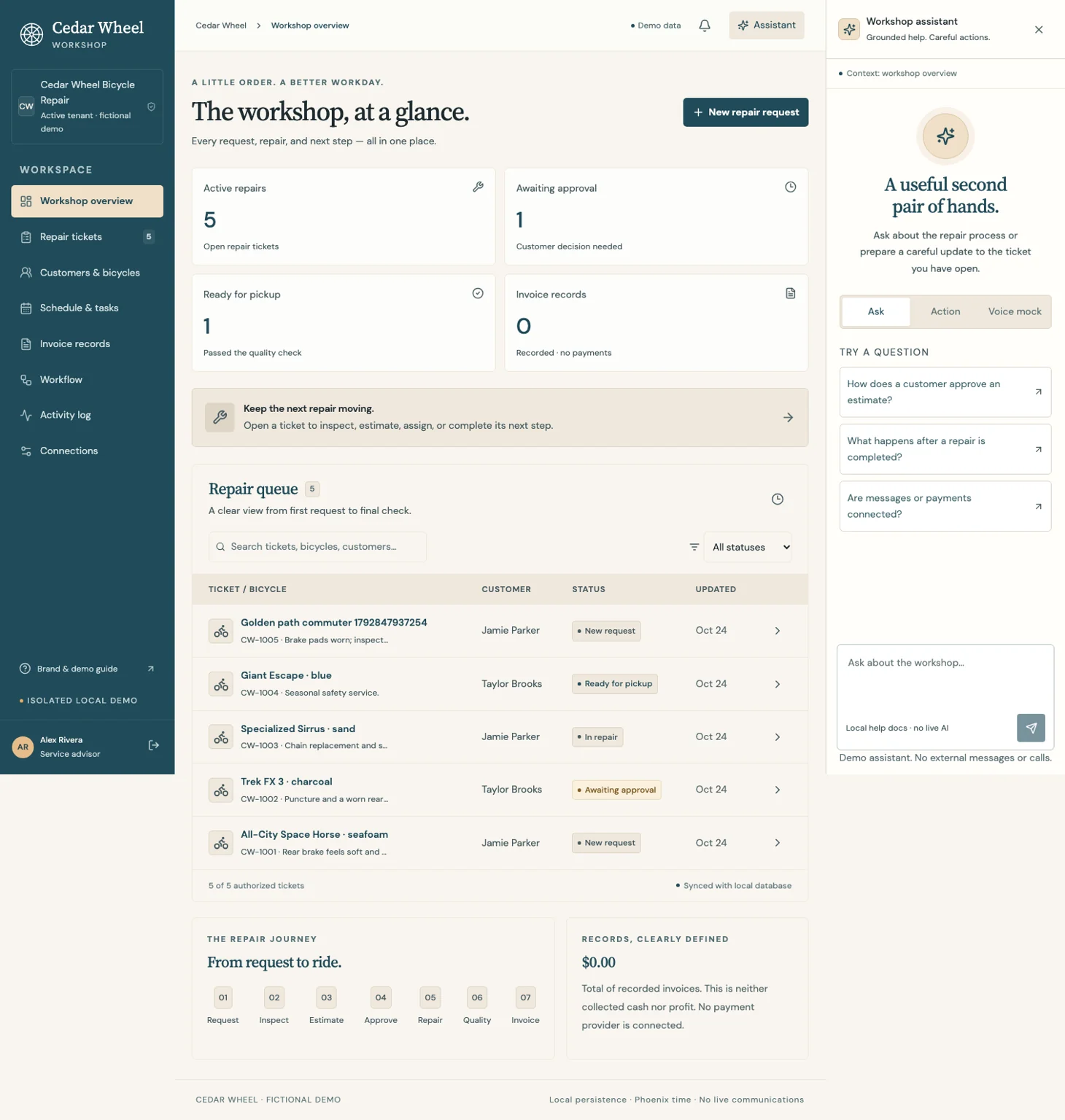
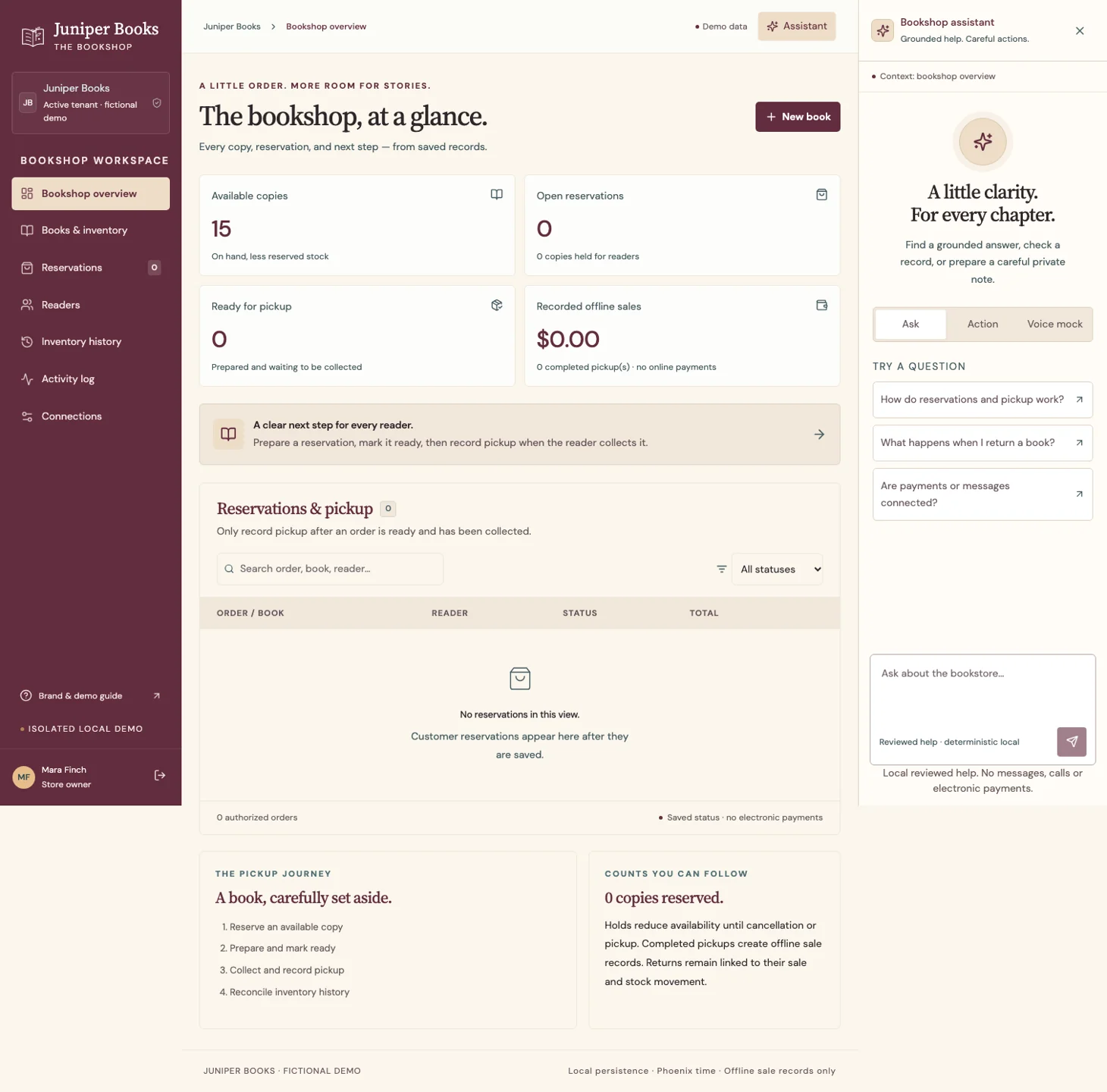
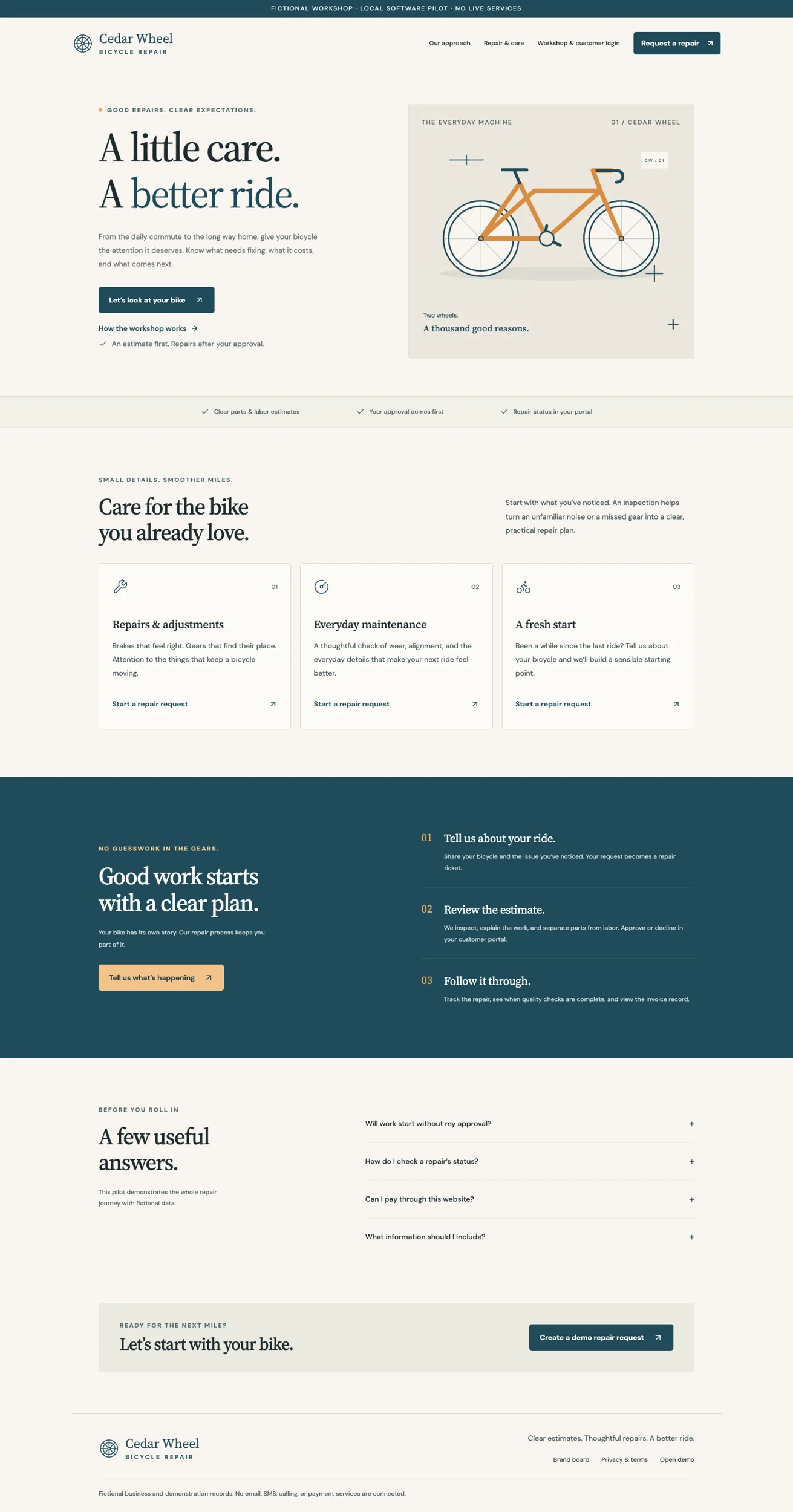
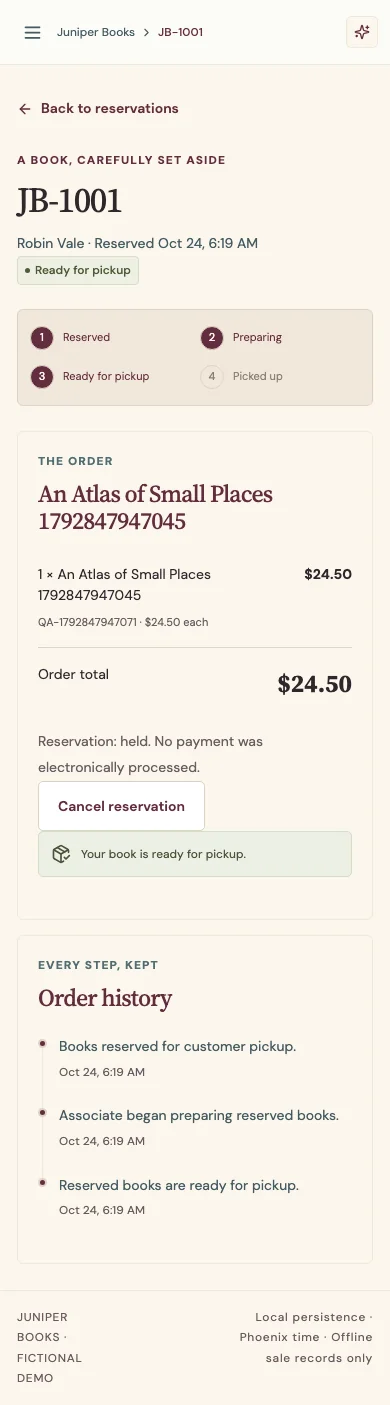
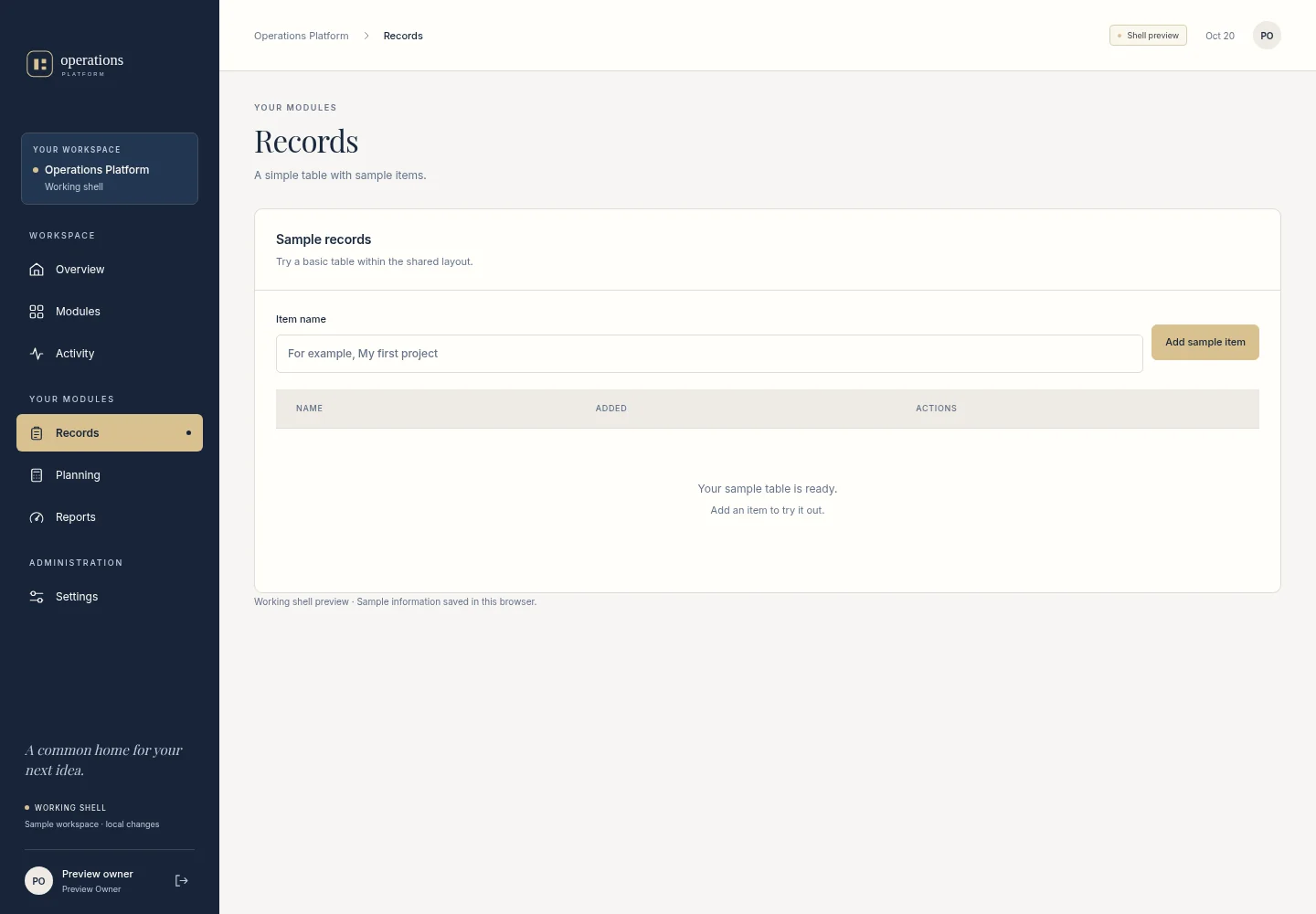
I built Cedar Wheel and Juniper Books as two fictional businesses. Each has a public storefront and a staff workspace. They reuse the same workspace shell and assistant components while keeping their databases and business rules separate.
Inside the platform
A shared workspace handles navigation, record views and the assistant drawer. Each business supplies its own rules and storage.
From request to receipt
The bicycle workshop
A customer requests a repair. The shop inspects the bike and prepares an estimate. After customer approval, staff assign the repair, perform a quality check and create an invoice record.
The bookstore
A reader reserves a copy. Staff prepare it for pickup, record an offline sale and reconcile a return. The inventory check prevents two holds on the last available copy.
The assistant
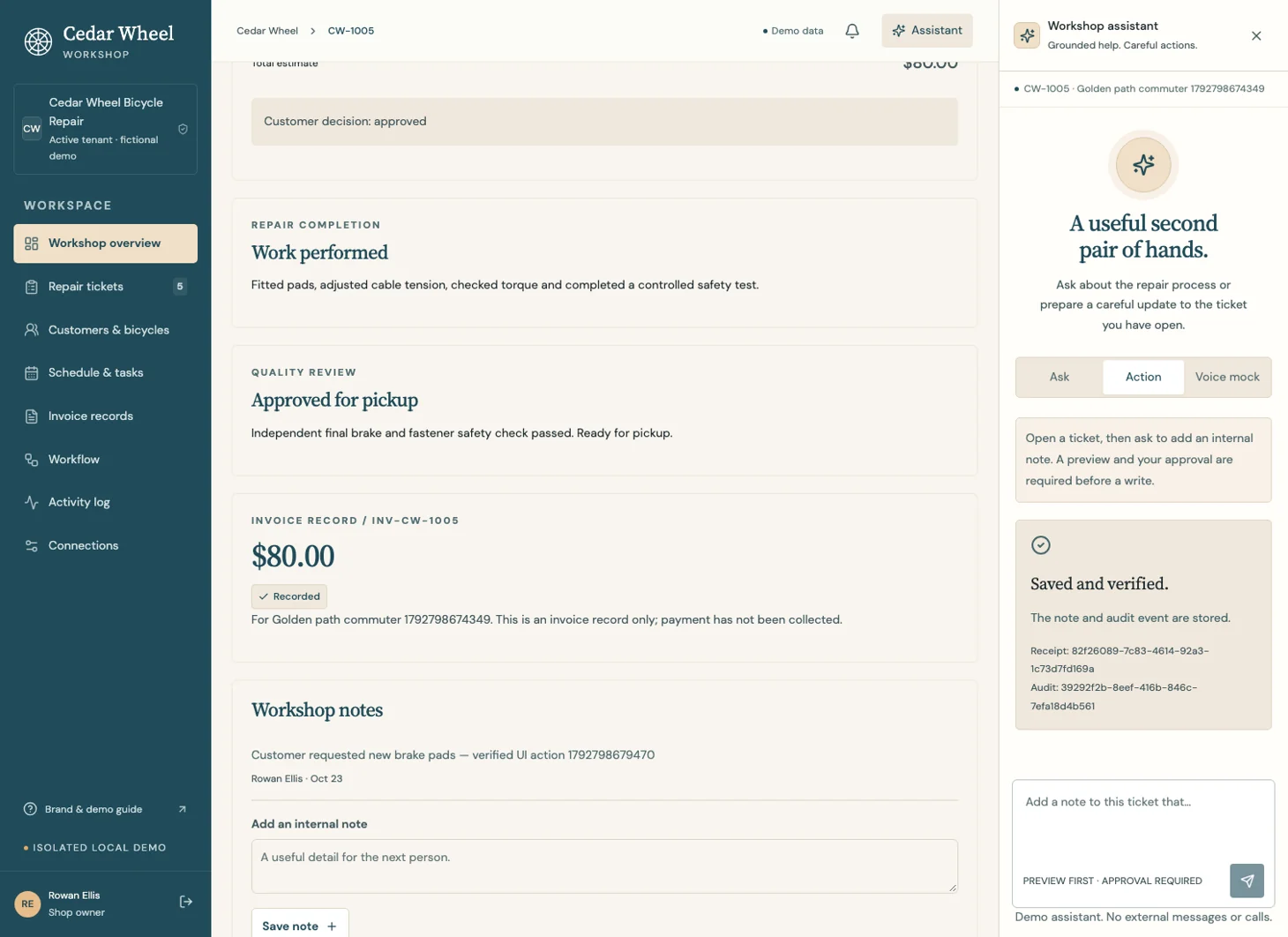
The assistant retrieves reviewed help and reads an authorized record. It previews a proposed note before asking for approval. The approved write produces an audit receipt, and a retry reuses the receipt.
What you can verify
- Seven selected API and assistant tests passed in a fresh replay with fictional databases. They covered both business workflows, approval, storage persistence and recovery of an action receipt.
- Ten archived browser scenarios passed across the two pilots. Seven exercised Cedar Wheel and three exercised Juniper Books.
Inside the pilots

What I learned
The useful boundary turned out to be the decision itself. Both teams can reuse a confirmation screen. Only the repair shop knows who can approve an estimate, and only the bookstore knows when a copy can be reserved.
Scope of the evidence
The pilots use fictional records. The assistant uses reviewed local help and a typed transcript simulation. Live model inference, microphone transcription, outbound messages and payment collection remain unverified.
Next question
Try a third business with a different approval rule and measure how much of its workflow can use the existing foundation.